Market Pulse: Hotter U.S. CPI, $1.28B ETF Outflows, and the Post-Midterm Crypto Landscape
Hotter October U.S. CPI (+0.4%) and a $1.28B weekly Spot Bitcoin ETF outflow have pushed 2026 ETF flows negative and tested BTC's $75K floor. Trade Charls unpacks Fed rate-hike odds, institutional divergence, and global regulatory momentum.Digital asset markets are navigating a decisive macroeconomic test in mid-November. A combination of sticky U.S. inflation, record institutional ETF rebalancing, and post-election legislative shifts in Washington has pushed Bitcoin through five consecutive weeks of selling pressure.

Digital asset markets are navigating a decisive macroeconomic test in mid-November. A combination of sticky U.S. inflation, record institutional ETF rebalancing, and post-election legislative shifts in Washington has pushed Bitcoin through five consecutive weeks of selling pressure.
At Trade Charls, our mandate is to separate emotional market reactions from structural capital trends. Below is our desk’s breakdown of the verified data driving digital assets right now, and the technical levels dictating the weeks ahead.
The Macro Shock: Hot October CPI Puts a December Fed Hike in Play
Macroeconomic headwinds intensified on November 10 following the release of the U.S. October Consumer Price Index (CPI). According to Morningstar and Haver Analytics, headline CPI rose 0.4% month-over-month while core CPI climbed 0.3%, both topping consensus forecasts. Shelter costs (+0.3% m/m) and the sharpest monthly jump in food prices this year (+0.5% m/m) drove the upside surprise.
Coming immediately after October’s stronger-than-expected U.S. Non-Farm Payrolls report (+165,000 jobs), sticky inflation has inverted rate-cut expectations. Futures markets now price roughly a 76.8% probability of a Federal Reserve rate hike on December 9. Because Bitcoin continues to trade closely alongside high-beta technology equities, rising U.S. Treasury yields and tighter liquidity expectations have weighed heavily on short-term risk appetite.
Institutional Flows: $1.28B Bitcoin ETF Outflow Flips 2026 Negative
The clearest signal of institutional de-risking appeared in regulated fund flows. Data from The Block and SoSoValue shows the 12 U.S. Spot Bitcoin ETFs recorded $1.28 billion in net outflows between November 2 and November 6—their largest weekly withdrawal since late June, followed by an additional $201 million net outflow on November 9. After entering November up $368 million year-to-date, cumulative 2026 Spot Bitcoin ETF flows have flipped roughly $914 million negative.
BlackRock’s IBIT Leads Redemptions Amid Institutional Divergence
Beneath the headline numbers, institutional allocation is diverging rather than exiting uniformly:
Concentrated Selling: BlackRock’s iShares Bitcoin Trust (IBIT) accounted for $1.21 billion, roughly 94%, of last week’s net outflows, alongside another $213.2 million redemption on November 9.
Selective Accumulation: Excluding IBIT, rival Bitcoin ETFs finished last week nearly flat (−$72 million). Fidelity’s Wise Origin Bitcoin Fund (FBTC) bucked Friday’s selloff with $42.82 million in fresh inflows, while wealth management giant LPL Financial disclosed a 50% increase in its Bitcoin ETF holdings to $261 million.
Structural Scale: Even after recent redemptions, U.S. Spot Bitcoin ETFs hold $95.9 billion in net assets, representing approximately 6.28% of Bitcoin’s total market capitalization.
Ether ETFs Extend Outflow Streak
Institutional caution has spilled over into major altcoins. U.S. Spot Ether ETFs shed $365.3 million last week, marking a sixth consecutive week of net outflows as developers postponed the next testnet phase of Ethereum’s Glamsterdam upgrade to further evaluate EIP-8037.
Post-Midterm U.S. Gridlock vs. Global Regulatory Acceleration,
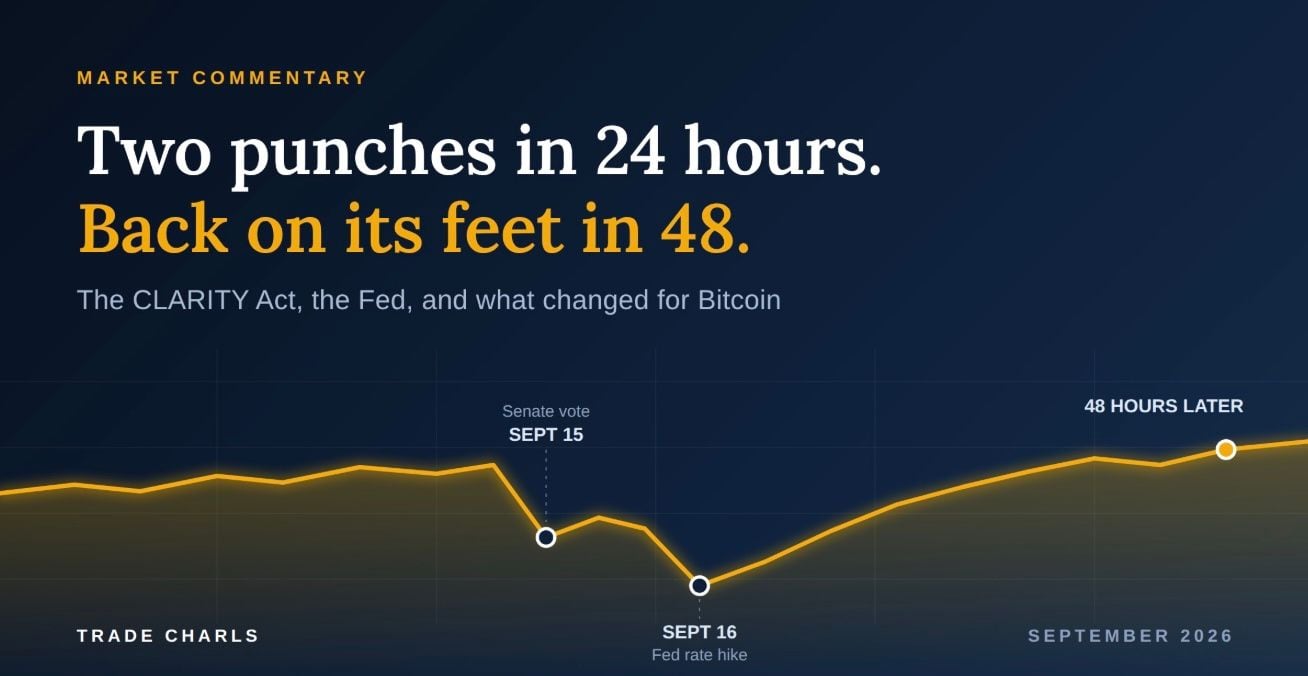
Washington’s Legislative Reset, the November 3 U.S. midterm elections, which saw Democrats win control of both the House and the Senate, have reshaped near-term legislative timelines. The market-structure CLARITY Act is now slated to expire on January 3, 2027 without a Senate vote. However, agency-level rulemaking continues to advance: on November 2, the SEC’s Division of Corporation Finance published new FAQs clarifying "functional" networks and decentralized governance, while the CFTC issued guidance on November 5 removing domestic geographic barriers across designated contract markets.
Dubai’s VARA Crosses 60 Licensed Firms
While U.S. legislation pauses, international regulatory hubs are scaling rapidly. Data compiled by Regulatory Gate on November 9 confirmed that Dubai’s Virtual Assets Regulatory Authority (VARA) has reached 60 active licensed digital asset firms—with 20 licenses granted in 2026 alone and another 23 companies holding In-Principle Approval. Broker-dealer (44 firms) and exchange services (17 firms) lead the expansion, underscoring sustained institutional infrastructure growth across the Middle East and global markets.
Key Bitcoin Technical Levels to Watch
With over $1 billion in leveraged positions liquidated across crypto derivatives within 24 hours and the Crypto Fear & Greed Index hovering in fearful territory near 28, technical discipline remains critical:
Immediate Resistance ($75,000): After slipping below its September 15 structural low of $75,000, Bitcoin bulls need a decisive daily reclaim above this pivot, alongside support at $73,795 (the March 2024 peak and 200-day moving average zone), to stabilize momentum.
Downside Liquidity Targets ($70,000 – $65,000): Sustained trading below $73,800 exposes lower liquidity pockets at $70,000, $67,000, and the late-August breakout base at $65,000.
Cycle Context: Research from Fidelity Digital Assets notes that based on historical four-year halving and adoption waves (following the November 2022 bear market trough), market participants are closely monitoring Q4 2026 for signs of seller exhaustion once macro rate expectations settle.
(Disclaimer: The insights and data shared in this article are strictly for informational, educational, and market research purposes. Trade Charls shares industry updates and observations from verified news channels; nothing herein constitutes financial, trading, or investment advice. Always conduct your own independent research.)